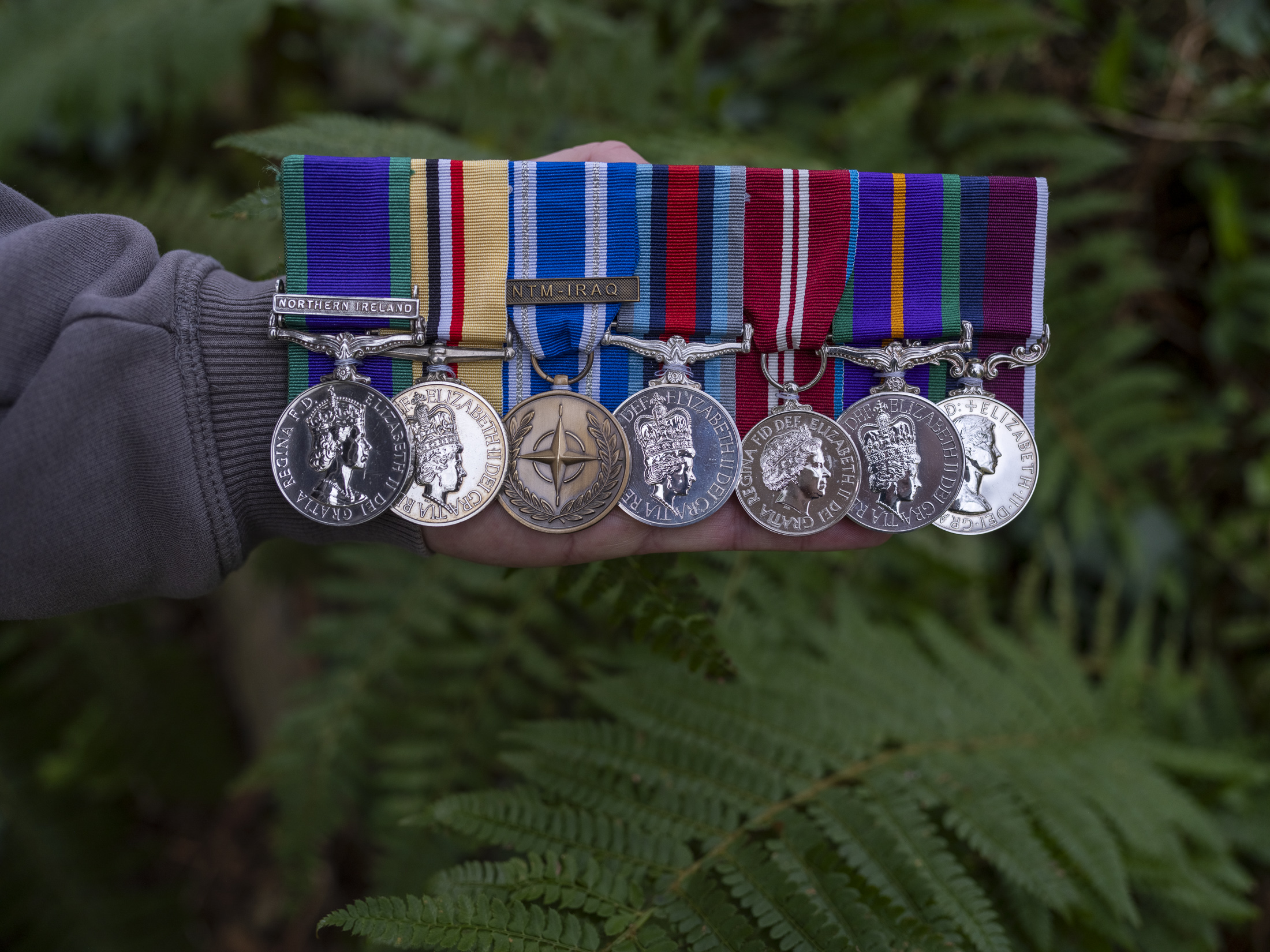

Despite Steve Hooper’s family history of service, joining the armed forces wasn’t part of his plan. Watching his brother pass out from the Royal Navy, he remembers thinking it “sounded scary and seemed like a lot of work.”
Steve instead went to college, aiming to become a professional athlete. When that dream proved unrealistic, he discovered that the Royal Air Force was recruiting physical training instructors (PTIs) as direct entrants. “I thought, that’s my path. I can stay in sport…” Yet when PTI recruitment was suddenly suspended, Steve was steered toward becoming a driver. After intensive training in advanced driving he joined his first RAF unit and within weeks he was driving ‘Green Goddesses’ on Operation FRESCO during the 2002–03 firefighters’ strike.
Soon after this came deployment to Cyprus on Operation TELIC, with troops held in readiness in case they were called into Iraq. In reality, Steve spent his time driving buses and HGVs around the island.


Hypervigilance became normal
Then came Northern Ireland - three years that seriously tested his skills. One day he might be refuelling aircraft; the next, driving senior officers or working chase cars. Sometimes this meant plain clothes, weapons and transporting personnel through hostile areas. Steve thrived on the adrenaline; hypervigilance became normal.
“You go to work, do your job, come home. Even on downtime, you looked after the person in front of you… they looked after you. You are naturally vigilant.”
That constant alertness followed him when he deployed to Iraq in 2006 - this time as a battlefield ambulance driver. The danger was immediate. His aircraft landed steeply, and as soon as the doors opened, rockets began landing. “That was my first experience of a rocket attack; getting off the plane… then a lot of screaming, shouting, get yourself into that terminal… a safe zone.”
That night, exhausted, Steve climbed into bed. When explosions and alarms woke him, he scrambled to get kitted up. The next morning, experienced colleagues showed him the routine: body armour opened on the floor, helmet beside it. Roll out of bed, pull the armour on, helmet on, and go back to sleep.
Over time, the chaos of explosions, gunfire and alarms became “…normal, but you always felt under threat.” Steve learned to sleep heavily - and eat - during attacks. “You’d just hit the deck, pull your plate down off the table, and eat on the floor. You only had a short time before you’ve got to be back at work.”
In the medical centre he was witnessing the toll of the insurgency on the Coalition forces. Three months into his tour, Steve experienced a mass casualty event. He was unprepared for the shock. “When you see it up close, with the smells… a taste in the air… the sounds, there's the feeling you get. It intensifies everything so much.”
Aircraft landed one after another. Steve unloaded casualties, took them to the hospital, turned around and went back again. “It felt like we were going time and time again… We worked as quick as we possibly could, but it felt like it was hours…”
It was seeing a soldier cry that brought the reality home to Steve. “…it was such an intense cry… you try and disassociate from what's actually going on. But when you suddenly realise, this is actually someone's friend, son, husband, boyfriend, it really makes everything real.”

No time to process
In rare downtime, Steve escaped through video games and TV. There was no space to process what was happening.
Back in the UK on leave, Steve always seemed ready for a fight. Small things triggered him: Christmas songs, his children walking barefoot. He internalised everything and family life became fraught. He was taken off frontline duties and given counselling, but redeployed again to Northern Ireland and then Cyprus, where the heat and light triggered memories of Iraq. His drinking increased.
Eventually Steve was diagnosed with severe PTSD. “It was a relief. There was a reason behind the way I was acting. I wasn’t a horrible person.” Returning to the UK, Steve had a few EMDR sessions. Called to face a medical board and the likely end of his career, Steve decided to “just crack on.”
Despite his diagnosis he was deployed again to Iraq, this time stationed in Baghdad as part of the NATO mission to train Iraqi forces. He was a close protection driver working with senior staff. “The threat was just always present. It didn't matter what day it was, what time it was...”
Eventually, after being asked to explain a request for extended leave, Steve accepted help. A psychiatrist explained that his PTSD had never gone away - he had been burying it for 13 years. Steve was medically discharged after nearly 20 years of service. He had signed up for a full 22-year career. “It was heartbreaking. I felt like I hadn’t achieved what I needed to.”
Proudest Achievement
Recovery began with a new job and a move closer to family, but Steve still felt he was a burden. “I thought they’d be better off without me.”
Becoming involved with the Invictus Games was what really drove his recovery. A triumphant milestone was when he was selected to be Captain of Team GB. “It’s not just the sport. It’s the shared experience - people who want to help you move forward.
Steve reflects that his greatest achievement isn’t medals or titles. “Being captain of Team UK was huge. But being a dad whose kids want to be near me after everything - that’s special.”
“Very few talk about Iraq… but those people who served on Op TELC… need to be remembered… you’ve got all the families of the deceased, of the wounded, families that suffer with mental illness… and they deserve to have their memory maintained.”