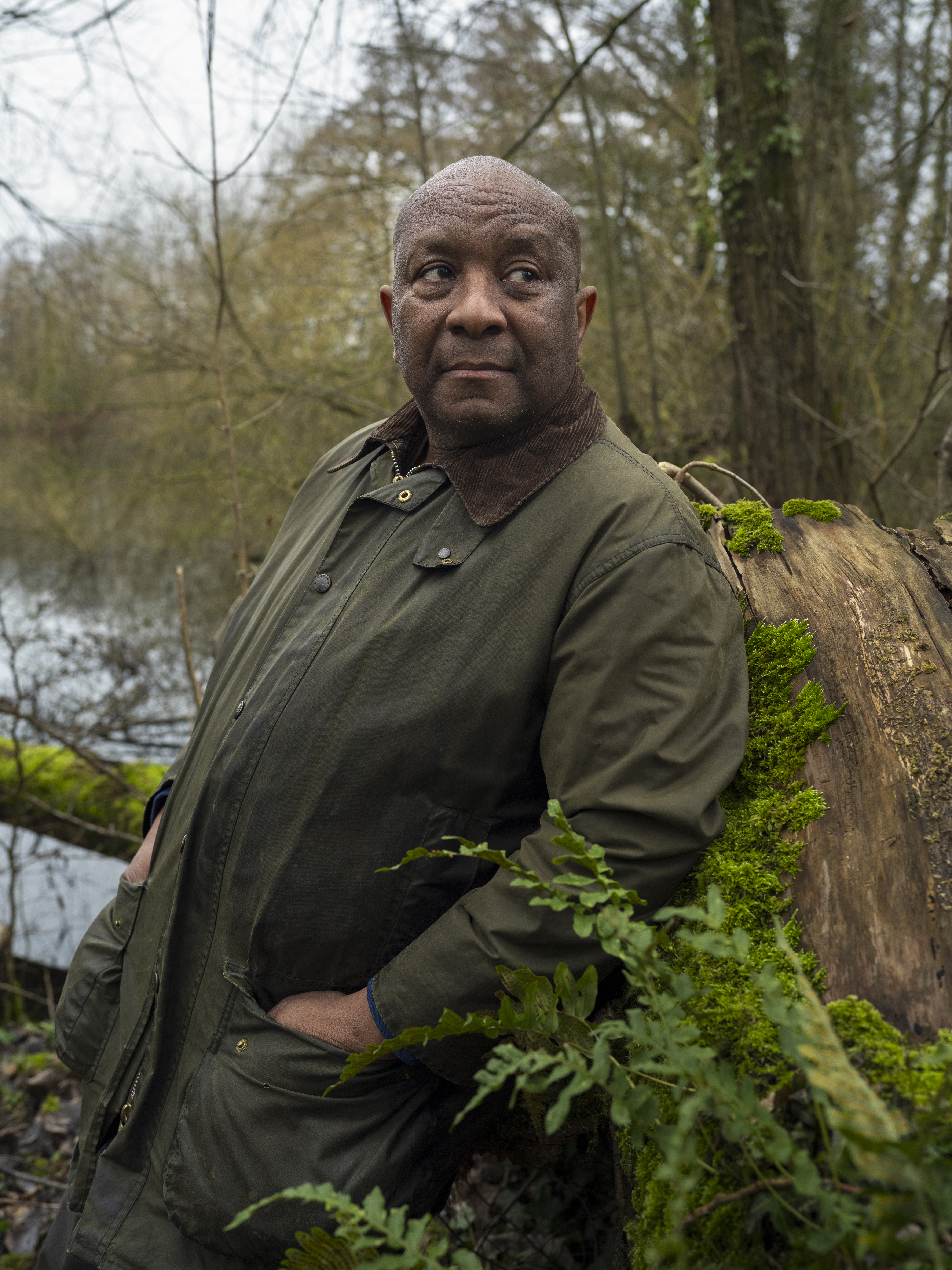

As a young Army Cadet, Andy had a genuine interest in the Regular Army. Yet, he explains, “What really inspired me was the opportunity to be different and embark on a career that was alien to my family.”
After attending Sandhurst in the mid-1980s, Andy joined the Royal Electrical and Mechanical Engineers (REME) and during his initial training course he won Best Young REME Officer of his intake. As a professional engineer, who specialised in helicopters, guided weapons and training, Andy obtained a BEng, MSc and an MA during his service which took him to postings in Hong Kong and Germany. He was awarded a MBE in 1999. Yet one area of operational experience had eluded him.


To help rebuild Iraq
In May 2007, Andy's time on the Advanced Command and Staff Course was coming to an end. His engineering specialism was undoubtedly more suited to a UK technical posting than a general operational tour to a theatre of war, but Andy had a deep-down desire for an operational tour.
“They [posting authority] asked for three choices, A, B, C, and in priority order: I went ‘operational tour, operational tour, operational tour’... there was a passion inside me that wanted to do an operational tour and especially in Iraq… because I knew we were rebuilding the country.”
In August 2007 Andy was deployed to Iraq as Deputy Chief of the Iraqi Security Forces Multinational Division South East, which included personnel from a dozen nations. His role was to oversee the training and equipping of the Iraqi Security Forces as part of the handover by Allied Forces. Although Iraq was now in a phase of handover and reconstruction, the situation was volatile. The intensity of attacks increased significantly during his tour.
“Let's put things into perspective. There were soldiers fighting hand to hand… with a threat of IEDs. Soldiers were still being killed; landmines, contacts still being made. Under frequent mortar, rocket and shell attack from outside the perimeter, I was in the relatively secure area of Basra Air Station, and only when I went out of the Air Station did I have to wear my full complement of body armour…”
In the Station, Andy and his colleagues had to build extra protection from shellfire around their sleeping areas. “We put concrete blocks round our sleeping mattress and an overhead shelter - a sheet of metal - and more sandbags. Your mattress was inside; we amusingly called it your coffin.”
At the end of a tour in Basra Air Station, it was possible for the Royal Engineers and Royal Artillery to produce a ‘Splat Map’ - a plan of where all the rounds landed during an individual’s time on the Air Station - and for it to be presented to the departing person. Andy still has his - stored in his loft.
The dark humour helped when the reality could be raw.
The repatriation of personnel began at Basra Air Station. Andy remembers: “we did the classic, three sides of a square, with the coffin draped in a Union Jack marched up to the tail end of the aircraft that was flying out. We've always had that moment of reflection. For anyone that wasn't on urgent duties, there was this parade to say our last farewells.”
Working together in Iraq
The rebuilding of Iraq involved a coalition not just of military forces from different countries, but also of non-military services from the UK. “We were all in it together… And considering the mix of personalities, the police and their culture, the British Army and their culture. I had an RAF guy in my team, a different culture. There were Australians in the team, a different culture... So, you had all these, a brilliant mix of culture and diversity of people and what they were trying to achieve.”
The training of the Iraqi police was done by British police officers. “The last thing I want is for the military to take all the credit and for the police to say, ‘Hang on a minute, we were there as well.’”
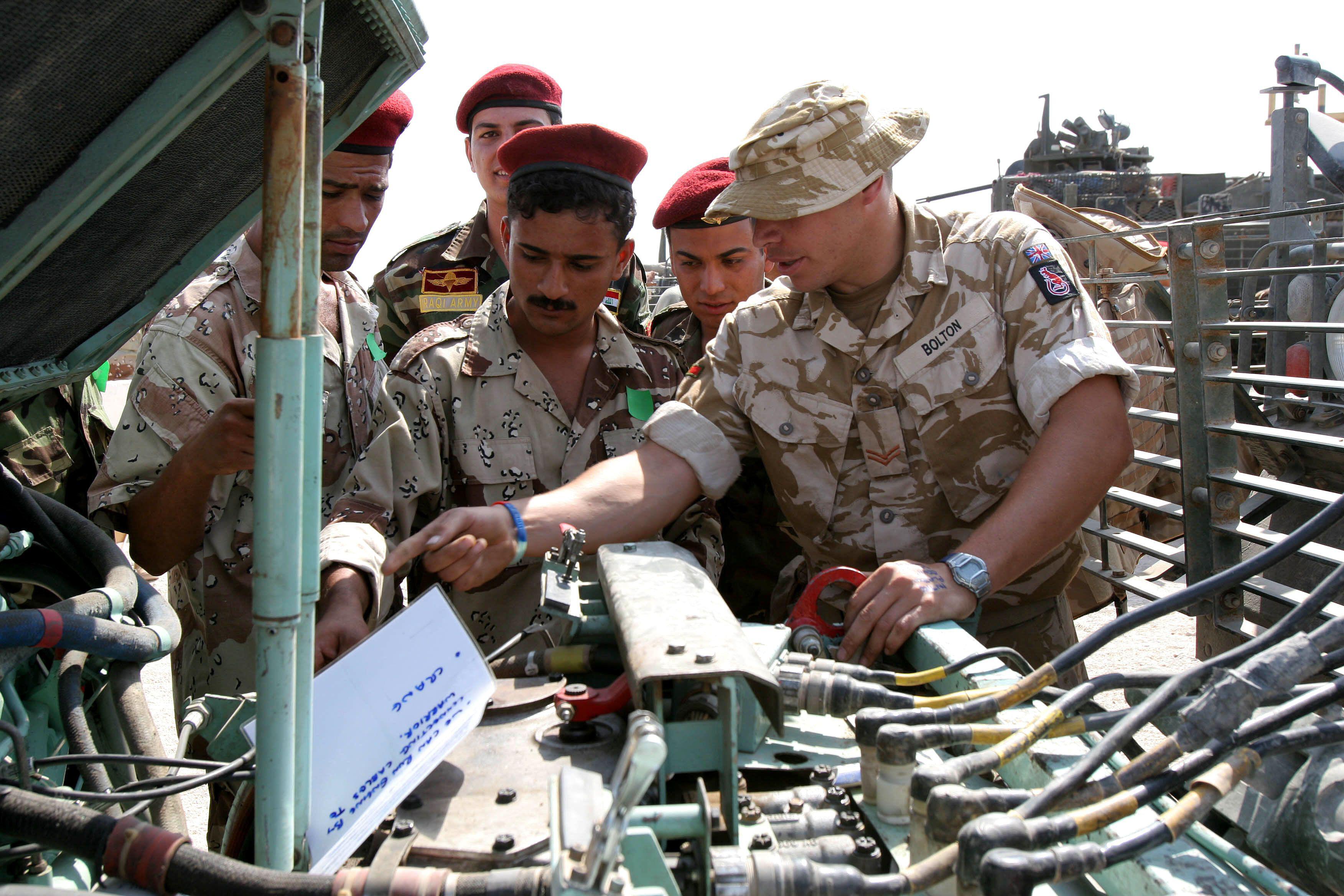 2P9HMPB: Associated Press / Alamy
Local interpreters were critical to coalition forces. “You relied very heavily on your interpreters being able to emphasise, and have empathy with the way that you were talking.” Whenever he went out, Andy’s interpreter “was with me. The hearts and minds piece; always making sure that when we visited an area, we sat down with the local seniors and shared a cup of tea with them as best we could. They appreciated that we are trying to do a good thing.”
Andy reflects on service in Iraq
After his operational tour in Iraq Andy was promoted to full Colonel. Returning to the UK presented its own challenges. Like many of his generation he separated his military experiences from his home life. “…obviously you've had your experience in Iraq and then you come home… But you wouldn't share those stories outside that community because they just won't get it.”
Andy reflects that today “the offer of help is more prevalent today… the military have got a plethora of options… maybe the generation coming through find it easier to talk to their partners about it.”
Events like the RBL’s Op TELIC event at the National Memorial Arboretum also help. “There'll be those that did the fighting, and there will be those that actually can claim a bit of victory for the… restructuring of the country. That operation itself, which I was part of, and I’m hugely proud of, the facilities that we built, the changes that we made in that moment in time. Huge pride”.
In many ways Andy feels that the Iraq War “is almost like a forgotten war… Everyone knows about Afghanistan, and a bit about the First Gulf War, because of the well reported media images. But what we did, not many people know about… (The military) does the fighting, but it also does the rebuilding. And it's the second part that we don’t get enough real recognition for.”
“We did not go out there to do a bad job. We went out there to do a bloody good job. And I think history will say that what we achieved in that time was bloody good. You know I go to sleep at night thinking ‘we did a good job’… I feel incredibly proud of what we achieved with minimal resources.”