
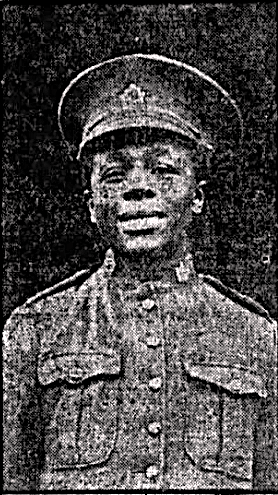
James Munroe Franklin was underage when he enlisted with the Canadian Expeditionary Force in 1915. Serving with the 4th Battalion, he is widely believed to be the first Black North American soldier to be killed in action in the First World War.
James was born in Mississippi and while still young his family moved to Hamilton, a port city in Ontario, Canada. After his mother’s tragic death in childbirth, he was placed in a Street Boys’ Home where he stayed until he was 14. He then found lodgings with a local family, became a library assistant and secretary for his local church and worked as a clerk and messenger boy at a prominent local drugstore. All four of the owner’s sons had volunteered to join the Canadian Expeditionary Force (CEF).
It was one of the sons who signed James’s papers of enlistment in July 1915. James was 15 and lied about his birth year to be accepted.
In April 2016, the CEF 76th Battalion left Halifax on the SS Empress of Britain, arriving in Liverpool in early May. Here the battalion was broken up and its men dispersed to those units which needed reinforcements. James was assigned to the 4th Battalion, which was to acquire an extraordinary war record, fighting in battles synonymous with the terrible sacrifices of the war: Ypres, Passchendaele, Vimy Ridge, Amiens and the Somme, which began on 1st July.
James had undoubtedly seen much action by the time Canadian units began moving up to the Somme front line in August. At the end of the month they were in support trenches near La Boisselle. The 4th moved from village to village, pushing back German attacks and enduring heavy artillery fire. The Allies aim was to take the German Regina Trench, the longest on the Western Front, defended by vast stretches of barbed wire. The unit’s commanding officer wrote in his diary that demolishing the barbed wire used up their supply of bombs.
On 8th October, according to family history, James was ordered to load his pack mule and carry combat supplies forward. His supply party took 12 casualties that morning as it crossed open ground. It is believed that James was among the dead, just four days short of his seventeenth birthday. The Chicago Defender, an African-American newspaper, reported that Franklin and his mule were “blown to pieces” by a “huge grandmother shell.”
In his will, Franklin left $250 to St. Paul’s African Methodist Episcopal Church, where he had worked as assistant secretary.
An estimated1,300-1,400 Black Canadians served in WWI, most of them in segregated units. However, as the Chicago Defender reported, James “who gave his life that democracy should rule the wide world over,” was the only Black soldier in his Battalion.
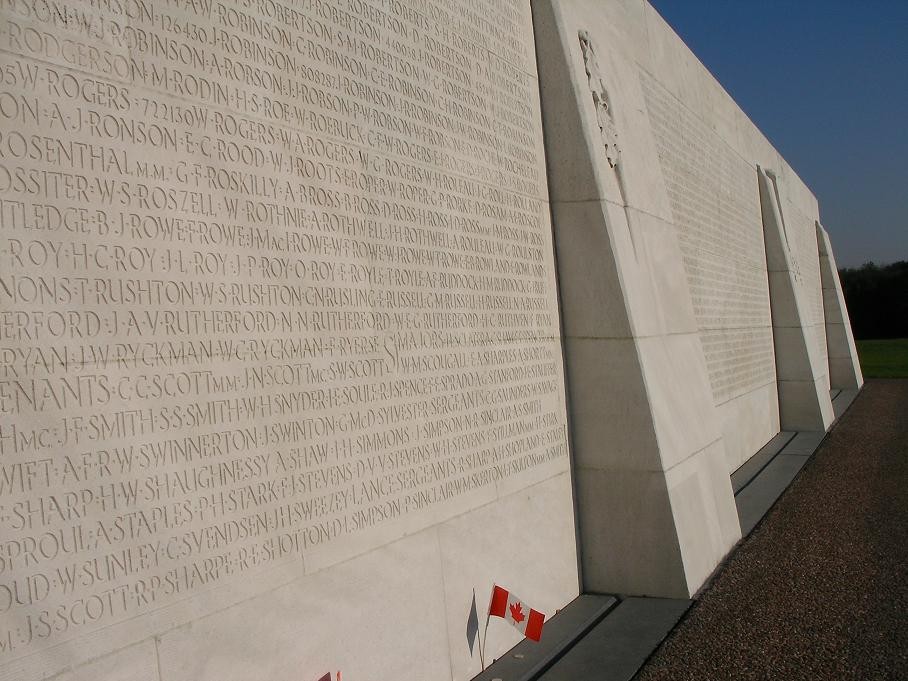
James Munroe Franklin’s name appears on the Canadian National Vimy Memorial alongside those of more than 11,000 Canadian soldiers killed during the War who have no known grave.